
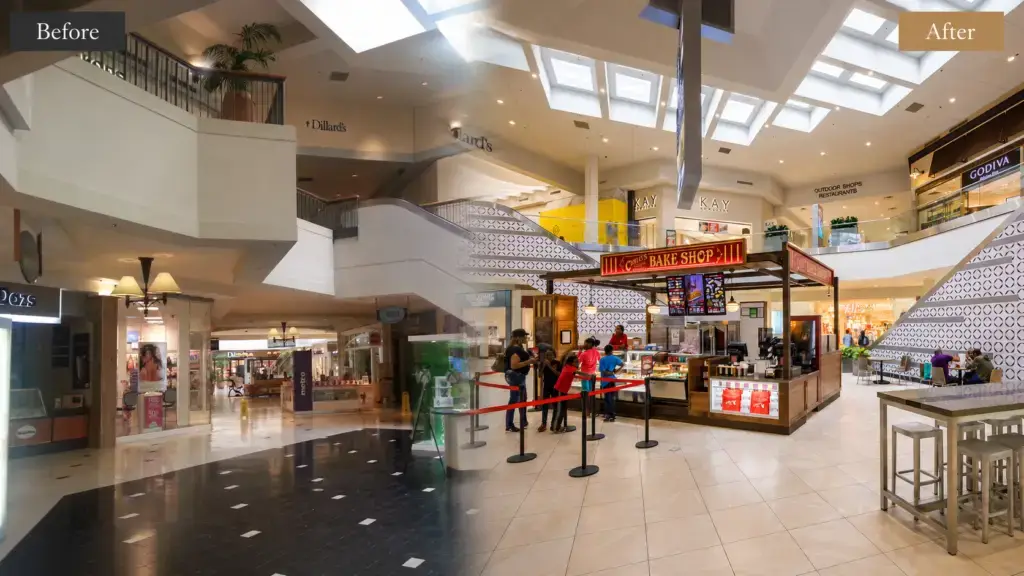
The work is intentionally unfinished. Ideas move quickly and nothing is precious yet.
And that is exactly the point.
One process, many kinds of design problems.
The ADC Design Charrette is not limited to one type or scale of project. We use it whenever a project would benefit from getting the right people together, exploring ideas quickly, and establishing a clear design direction before moving deeper into development.
That may mean:
- Creating the conceptual brand and design language for a new prototype or multi-location rollout
- Establishing the direction for a single complex project, such as the renovation of a shopping center or other large existing environment
- Helping an established operator rethink or strengthen its physical brand for use across multiple locations
- Defining the overall design direction for a new workplace, commercial environment, or other project before architecture and interiors are developed further
Sometimes the result needs to become a repeatable prototype. Sometimes the challenge is one unique property. Sometimes the client has a successful business but needs help defining what its physical environment should communicate. And sometimes, as with a project like Subaru, the ADC Design Charrette helps establish the fundamental design ideas that will guide everything that follows.
The scale changes. The process does not.
The goal is to understand the problem, explore the possibilities, and leave with a direction everyone can move forward with.
The work starts before we get in the room.
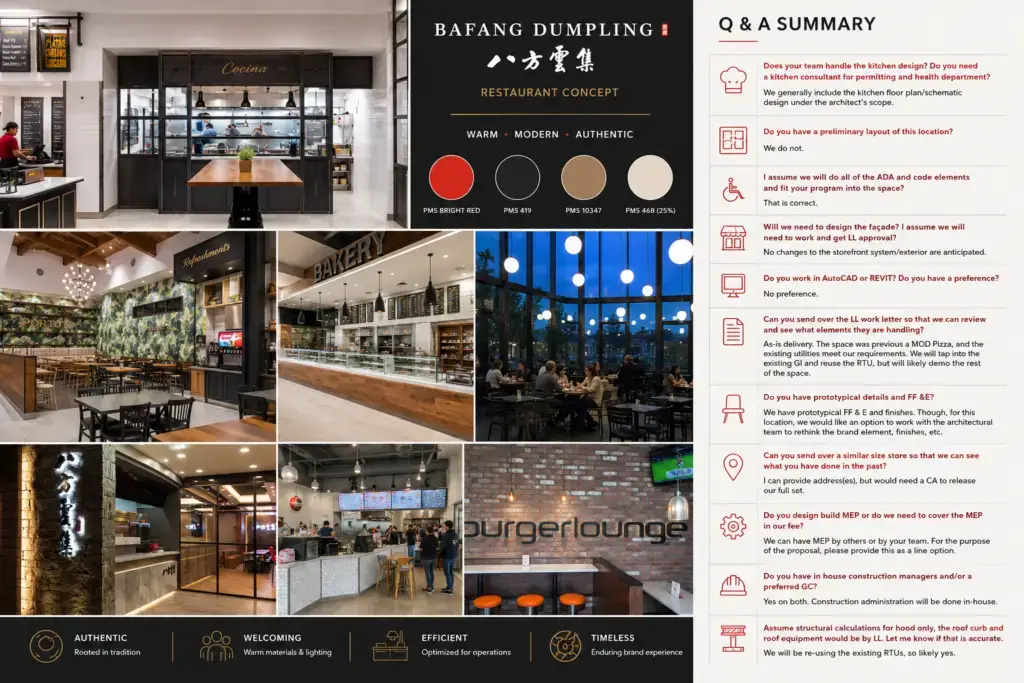
A successful ADC Design Charrette begins well before anyone starts sketching.
Before the session, we ask the client to tell us what they know and, just as importantly, what they are still trying to figure out. The goal is to understand the project well enough that when everyone gets together, we can spend our time exploring possibilities rather than simply gathering information.
We want to understand:
- The goals and priorities for the project
- Operational and design challenges
- Areas that need the most attention
- What success should look like
- What the client hopes to accomplish during the ADC Design Charrette
We also ask for inspiration. Places, materials, environments, brands, experiences, or even things that have little to do with the actual project can tell us a lot.
We are not looking for something to copy. We want to understand why someone responds to it. Maybe it feels warm, simple, energetic, unexpected, familiar, sophisticated, or casual. Those reactions begin to create a shared vocabulary for the conversation that follows.
First, make sure we heard the same thing.
When the ADC Design Charrette begins, we do not immediately start presenting solutions.
ADC starts by reflecting the information back to the client. We talk through what we heard, what we believe the priorities are, where we see opportunities, and where we think the difficult questions may be.
That clarification matters because the same words can mean very different things to different people. A client may describe something as warm while a designer imagines something entirely different. Operations may be concerned about something marketing has never considered. Ownership may be focused on the overall experience while the people running the space every day see another challenge.
This first conversation gives everyone the opportunity to clarify, correct, question, and add to what we have heard before the design begins.
Sometimes “No, that is not what we meant” is just as valuable as “Yes, exactly.”
Both move the project forward.
Get the right people in the room.
A project looks different depending on where you sit, which is why we prefer to have the people who influence its success involved in the ADC Design Charrette.
Depending on the project, that might include:
- Ownership and leadership
- Operations
- Marketing and brand
- Maintenance and facilities
- Construction or development
- Merchandising
The people who will actually work in or operate the space
Each sees the project through a different lens, and all of those perspectives have value.
They do not need to agree. In fact, disagreement can be incredibly useful when it happens while ideas are still flexible.
Something that looks like a small design decision to one person may create a major operational problem for someone else. A maintenance concern may change a material decision. A marketing idea may affect circulation. An operational requirement may uncover a completely different planning solution.
It is much better to have those conversations around a sketch than on a construction site.
The goal is not to get everyone to agree before we design. The goal is to make sure the right questions are in the room.
Love it. Hate it. Just tell us why.
We ask clients to be direct.
Love it, hate it, brilliant, stupid, too much, too safe, wrong direction, interesting but not quite right. Strong words are useful because they give us something to work with.
We would rather hear “I hate that” than “I’m not sure.”
There is no ego attached to an idea during an ADC Design Charrette. We are all trying to get to the solution that best solves the problem. If something works, we develop it. If it does not, we learn from it and move on.
The most valuable part often comes immediately after the reaction, when we ask one simple question: Why?
Understanding why someone loves one idea and rejects another begins to reveal what they actually want and need from the project. Sometimes the client is discovering that at the same time we are.
That honesty makes the process move.
Then the studio gets to work.
After the initial conversation, ADC steps away for a focused design session, usually two or three hours.
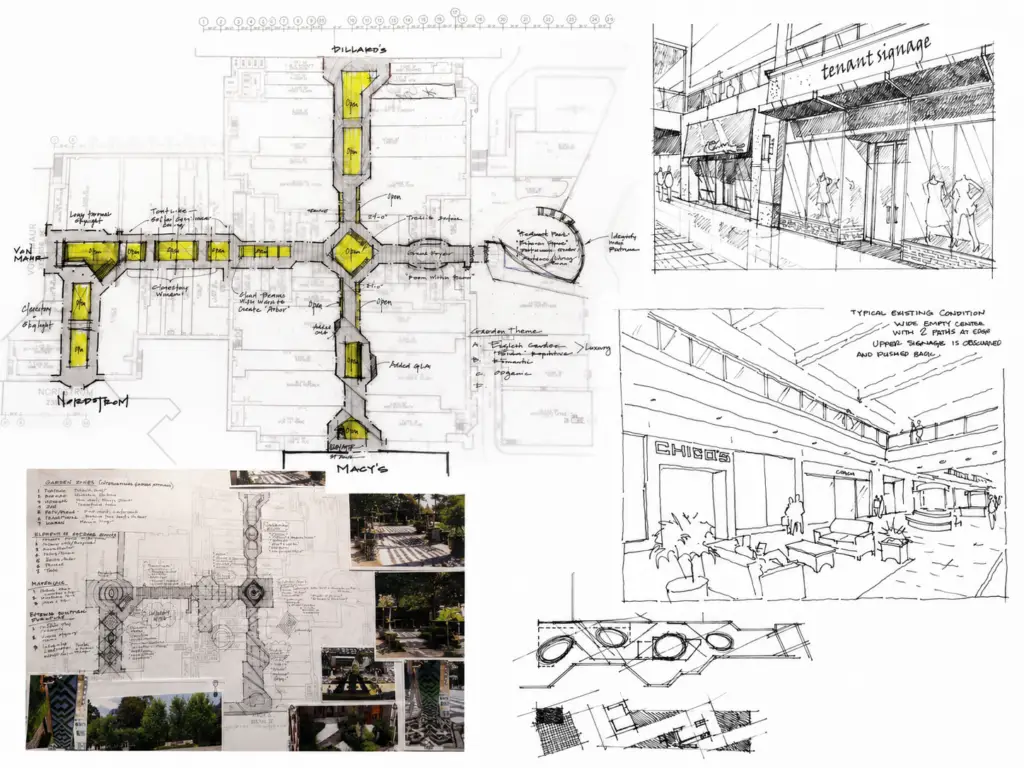
A typical ADC Design Charrette includes three or four ADC team members and can happen at the project site, the client’s office, or our studio. Wherever we are, we bring the tools we need to work in real time, including computers, drawings, inspiration, models, and visualization tools.
We sketch ideas, test layouts and circulation, study adjacencies and operations, pull additional inspiration, explore materials and architectural forms, and begin developing three dimensional studies or quick visualizations when they help explain the idea.
For a prototype or rollout, we may be testing the elements that need to remain consistent from location to location while also considering what needs flexibility.
For an existing property, we may be working through circulation, architecture, facades, common areas, materials, or the overall experience of the place.
For a brand-focused ADC Design Charrette, we may be exploring how the character of an established business translates into architecture, interiors, graphics, materials, and the experience of a physical location.
Different problems require different tools, but the working method stays the same.
An idea discussed in the morning can become a sketch or digital model that the client is reacting to only a few hours later.
The goal is not polish. The goal is to make an idea visible enough that everyone can understand it and respond to it.
Show the work before it feels finished.
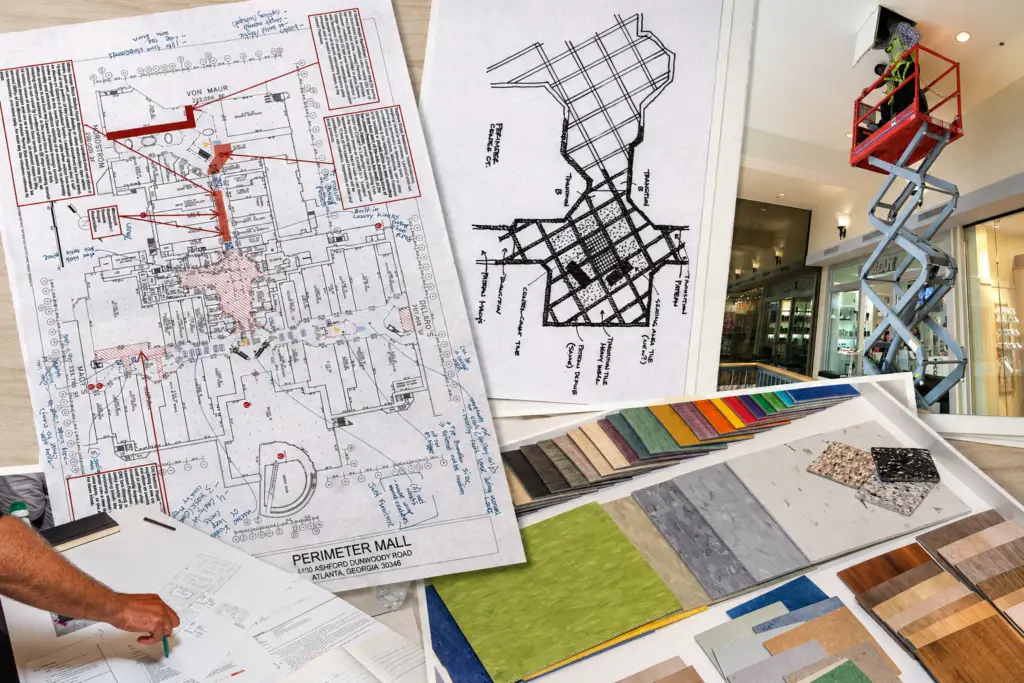
A few hours later, we come back together and show what we have been exploring.
Not a final answer. A direction.
We explain what changed, what we tested, what we learned, and where we think the strongest opportunities may be. Then the conversation starts again.
What works, what does not, what feels interesting, what should be pushed further, what feels wrong, what are we missing?
Now the client is no longer reacting to an abstract word from a questionnaire. There is something in front of everyone that can be seen, discussed, questioned, and changed.
Very often, seeing the possibilities is what helps someone understand what they actually want.
This is where the magic happens.
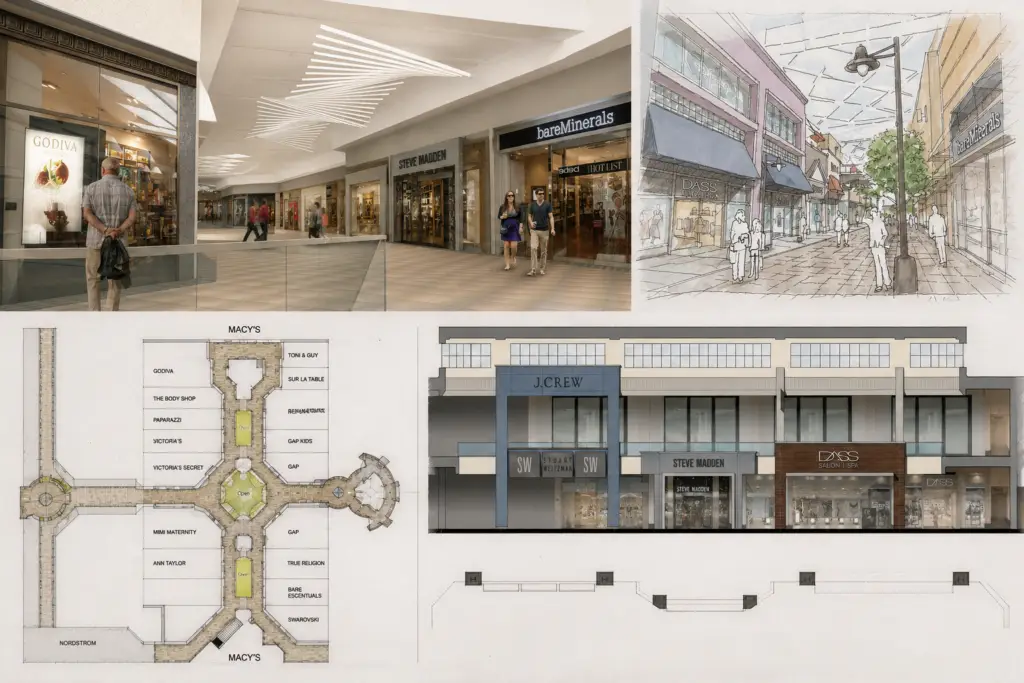
Clients do not always arrive knowing exactly what the solution should be.
They should not have to.
They know their organization, their customers, their operations, their challenges, and what they hope the project can accomplish. Our job is to translate that knowledge into design possibilities they can see, understand, and react to.
A sketch might suddenly make an operational problem obvious. A rendering can reveal that an idea that sounded exciting does not actually feel right. A model can uncover a relationship nobody had considered. A mockup can make scale, material, or experience understandable in a way that words cannot.
And sometimes a conversation about one idea leads somewhere completely unexpected.
That exchange is the heart of the ADC Design Charrette.
Sometimes you have to see the wrong answer before you can recognize the right one.
Then we do it again.

One cycle rarely solves everything.
We take the feedback, step away, work again, and return to the table.
Sketch. Present. React. Refine.
With every round, the field of possibilities becomes smaller and the design becomes more focused.
The length of the ADC Design Charrette depends on the scale and complexity of the project. A smaller project may take two focused days, a medium project typically takes three, and larger projects may require four days or more.
The important thing is not the number of days. It is keeping the conversation moving while everyone is focused on the same problem.
An idea discussed in the morning can become something the client is reacting to that afternoon. That compressed feedback loop allows the project to move quickly without rushing the thinking.
Direction before detail.

An ADC Design Charrette does not produce a finished project.
It produces something more important at that stage: direction.
By the end of the ADC Design Charrette, we want to have:
- Explored the major ideas
- Identified the strongest direction
- Heard the concerns of key stakeholders
- Uncovered problems while they are still easy to address
- Challenged assumptions that needed to be challenged
- Created a shared understanding of where the project should go
What happens next depends on why the ADC Design Charrette was created.
For a rollout or prototype, the work may become the basis for a repeatable design language that can be developed across future locations. For an existing operator, it may establish a new physical brand direction. For a single project, it may define the architecture, interior experience, materials, and major design moves. For a broader conceptual exercise, it may simply answer the most important question first: What should this place become?
ADC then brings that work back to the studio.
Sketches become developed drawings, three dimensional models are refined, materials and finishes are explored, and details begin to emerge. Renderings, mockups, and additional studies help communicate the experience more clearly.
The final ADC Design Charrette package captures the direction everyone helped establish and becomes the foundation for the next phase of design.
Better conversations make better projects.
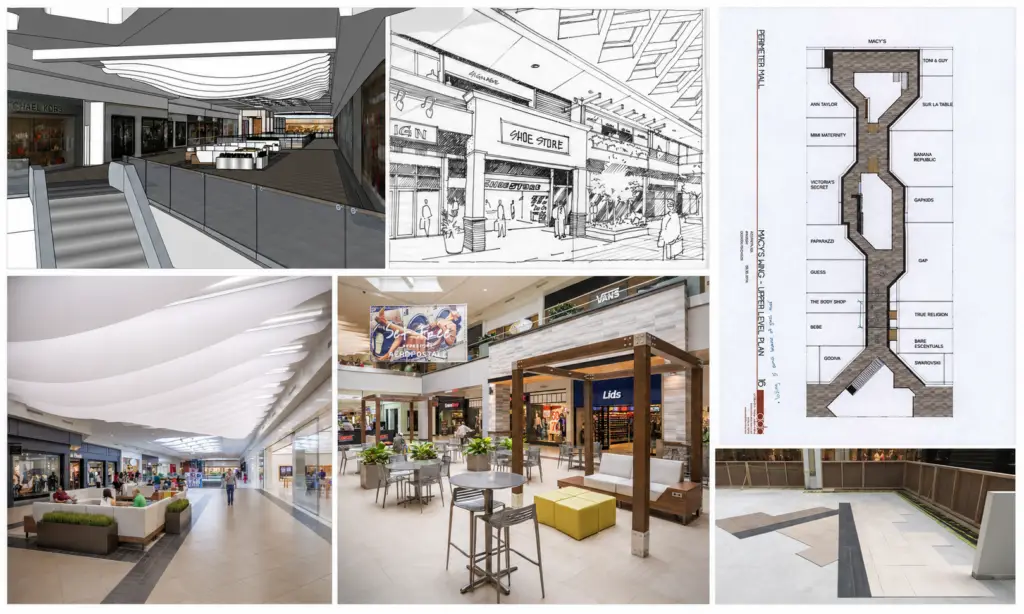
The ADC Design Charrette is not about designing faster for the sake of speed. It is about making important decisions while ideas are still flexible.
It can help establish a brand that will be carried across dozens of locations, rethink an existing property, define a prototype, solve a single complicated project, or simply give a client and design team the confidence that they are moving in the right direction.
Whatever the scale, the value comes from the same place.
The ADC Design Charrette brings the client into the design process instead of asking them to wait for a finished presentation. It gives different stakeholders a voice, creates room for disagreement without making disagreement a problem, and allows the design team to learn from real reactions instead of assumptions.
Most importantly, it creates a shared direction that everyone helped shape.
That is why the ADC Design Charrette has become such an important part of how we work at ADC.
Good design rarely comes from one person having the perfect idea. More often, it comes from getting the right people around the same table, asking better questions, and being willing to explore where the answers lead.